
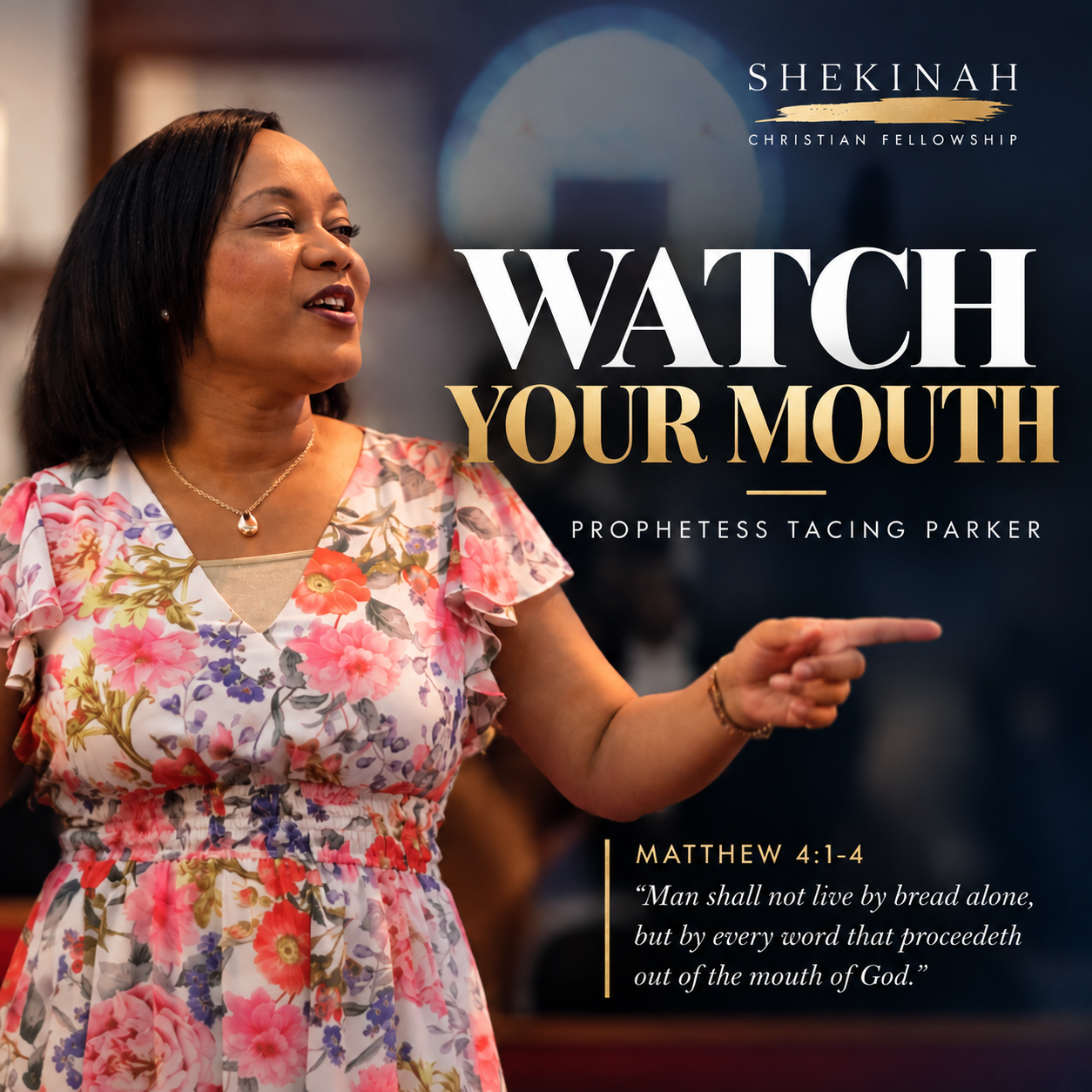

Watch Your Mouth: The Power of Words in the Wilderness
Life has a way of testing us. Whether walking through seasons of joy and celebration or dry places marked by fatigue, grief, or uncertainty, our circumstances inevitably influence what we say.
In this powerful message, Prophetess Tacing Parker challenges us to examine the language of our hearts and lips with a direct reminder: Watch Your Mouth.
What Does It Mean to “Watch”?
To “watch” isn’t merely looking on passively. In a spiritual sense, to watch means to guard, monitor, and stay alert. It is active surveillance over our hearts and words to protect against spiritual harm.
Our words possess dual power: the power to destroy and the power to cultivate. What we vocalize can either align with fear and frustration or plant seeds of divine breakthrough and endurance.
Understanding the Wilderness Season
Reflecting on Matthew 4:1–4, we see that after His baptism, Jesus was led by the Spirit into the wilderness.
-
God-Led Wildernesses Serve a Purpose:
Jesus didn’t stumble into the wilderness by accident; the Spirit led Him there. A dry season does not mean God has abandoned you. When God leads you through a difficult season, His presence and grace sustain you through it. -
Making Choices That Build the Spirit:
While in the wilderness, Jesus chose to fast. When our environment shifts into rugged or difficult terrain, what choices are we making? Are we seeking worldly escapes, or are we making spiritual decisions that strengthen our faith? -
Temptation Strikes at Vulnerable Moments:
The enemy approached Jesus at His point of physical weakness and hunger, attempting to get Him to misuse His authority. In our moments of trial or weariness, the enemy attempts to provoke us to complain, quit, or speak against God’s promises.
Responding With the Word, Not the Flesh
Jesus had every earthly reason to speak about His exhaustion, hunger, or physical depletion. Instead, He answered Satan by declaring:
“Man shall not live by bread alone, but by every word that proceeds out of the mouth of God.”
Rather than complaining about the conditions of the wilderness, Jesus stood on the Word. He didn’t engage in fleshly arguments; He recited, stood on, and rebuked the enemy using truth.
Practical Takeaways for Your Walk
- Align Your Language with God’s Truth: Stop speaking defeat over your health, family, or purpose. Speak what God says about you.
- Cultivate Quick Forgiveness: Don’t let offenses linger or poison your speech. Forgive quickly, let go of grudges, and keep your heart clear.
- Stand in the Gap: Use your voice to intercede for your children, family, and community, declaring life and breakthrough.


Leave a Reply